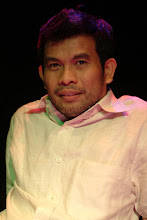
After the successful collaboration between storyteller: Zulkifli Mohamad, Director & Artistic Director: Hamzah Tahir and Children of Tunas Budaya - Jabatan Kesenian, Kebudayaan and Warisan, Wilayah Persekutuan, Chini, the children dance theatre was staged at the small theatre of Istana Budaya in September 2005. The production was an unlucky collaboration with the notorious producer consist of Mr.Mohzan, Ms.Intan Shahnaz and a Yayasan under the Ministry of Women, Family and Community Development). After 1 year rehearsal with the children and successful staging at the Istana Budaya, the producer failed to pay to the people involved, including 50 children performing. The writer is in the process of reporting the matter to the newspaper.
Despite of the unlucky collaboration, Zulkifli Mohamad is now ready with his requel to "Kota Sang Naga".
Tuesday, December 20, 2005


LALAK in NSTP Group Online
1. MA 04/12/2005 Melalak di Panggung DBKL Oleh ABIE ABDULLAH (387 wds)
MAHU atau tidak, perlu diakui dunia tarian di Malaysia kian malap. Sejak persembahan Emas 10 September di Istana Budaya tahun lalu, artistik itu bagaikan hilang daripada pandangan persada seni negara. Bukan tiada penonton. Buktinya, persembahan tarian dari French Dance Troupe di KL Pac baru-baru ini mendapat sambutan memberangsangkan.
2. MM 02/12/2005 Howling on stage By Amir Hafizi (758 wds)
WHEN people say lalak or melalak, the image they usually try to convey would either be kids yelling hysterically or a teenager singing in the bathroom relying more on passion rather than talent. Probably that's what five Malaysian choreographers wanted to portray through their contemporary dance anthology. Well, at least they're doing it with a whole bucket-load of talent.
3. BM 27/11/2005 Lalak selit tragedi Tak Bai Oleh Roslen Fadzil (325 wds)
KEMELUT yang pernah melanda tanah air mahupun negara serantau seperti tragedi tsunami serta pertumpahan darah di Tak Bai, Thailand adalah antara peristiwa hitam yang sukar dilupakan. Ia menarik perhatian semua termasuklah sekumpulan koreografer yang akan beraksi dalam satu kolaborasi tarian kontemporari menarik berjudul Lalak. Persembahan yang julung kali dianjurkan Dewan Bandaraya Kuala Lumpur (DBKL) dengan kerjasama Svarnabhumi Studio (SVB) itu akan dipentaskan di Panggung Bandaraya, Kuala Lumpur mulai 2 hingga 4 Disember ini.
MAHU atau tidak, perlu diakui dunia tarian di Malaysia kian malap. Sejak persembahan Emas 10 September di Istana Budaya tahun lalu, artistik itu bagaikan hilang daripada pandangan persada seni negara. Bukan tiada penonton. Buktinya, persembahan tarian dari French Dance Troupe di KL Pac baru-baru ini mendapat sambutan memberangsangkan.
2. MM 02/12/2005 Howling on stage By Amir Hafizi (758 wds)
WHEN people say lalak or melalak, the image they usually try to convey would either be kids yelling hysterically or a teenager singing in the bathroom relying more on passion rather than talent. Probably that's what five Malaysian choreographers wanted to portray through their contemporary dance anthology. Well, at least they're doing it with a whole bucket-load of talent.
3. BM 27/11/2005 Lalak selit tragedi Tak Bai Oleh Roslen Fadzil (325 wds)
KEMELUT yang pernah melanda tanah air mahupun negara serantau seperti tragedi tsunami serta pertumpahan darah di Tak Bai, Thailand adalah antara peristiwa hitam yang sukar dilupakan. Ia menarik perhatian semua termasuklah sekumpulan koreografer yang akan beraksi dalam satu kolaborasi tarian kontemporari menarik berjudul Lalak. Persembahan yang julung kali dianjurkan Dewan Bandaraya Kuala Lumpur (DBKL) dengan kerjasama Svarnabhumi Studio (SVB) itu akan dipentaskan di Panggung Bandaraya, Kuala Lumpur mulai 2 hingga 4 Disember ini.
LALAK
LALAK, A Contemporary Dance Theatre Production
Venue: Panggung Bandaraya, Sultan Abdul Samad Building,
Jalan Raja, 50506, Kuala Lumpur
Date & Time: Fri 2 - Sun 4 Dec 2005 Telephone: 03-2699 3872
Synopsis: The word 'Lalak' means to scream or yell loudly. This word just about sums up what the five gifted choreographer/dancers are longing to do - scream out against our increasingly materialistic world, where Western values are lauded and where art has taken a backseat to everything else. Lalak is also meant to be a dialogue that questions the integrity of Malay people in this era of globalisation.
The five choreographers who have joined forces to produce this are Syed Mustapha, Jasni Ahmad, Hamid Chan, Junainah Long and Zulkifli Mohamad. They have produced two dances each, one solo piece (where they will perform their own dance) and one group piece.
The program:
Choreographer: Syed Mustapha
Solo Piece: Keliru
Group Piece: Om Bak
Choreographer: Jasni Ahmad
Solo piece: Argo-Gede
Group Piece: Episod Hanuman
Choreographer: Hamid Chan
Solo piece: Paroiku
Group Piece: Kukuda
Choreographer: Junainah Long
Solo piece: Untitled I – Suara Tubuh
Group Piece: Untitled II - Wanita
Choreographer: Zulkifli Mohamad
Solo piece: 1914:2004
Group Piece: Jadi Jawa Jawi
Produced by Dewan Bandaraya Kuala Lumpur in collaboration with Svarnabhumi(SVB) Studio.
Links: http://www.dbkl.gov.my/panggung/index.php
Public Rating: (5 votes)
User Comments:
most wanted performance Sun, Dec 04 2005 17:26:06
satu persembahan yang menarik.setiap kareografer mempunyai daya tari yang dapat menarik penonton untuk terus duduk dikerusi.
posted by colourfull chicken situmas@yahoo.com
--------------------------------------------------------------------------------
syabas dbkl! Good Start! Mon, Dec 05 2005 02:54:38
Satu event yang seharusnya menjadi aktiviti tahunan dbkl. Harapnya memberi nafas baru kepada artis budaya dbkl untuk menerokai dunia kontemporari.
posted by anjung anjungtari@yahoo.com
--------------------------------------------------------------------------------
bolehlah... Wed, Dec 07 2005 15:22:02
tahniah kepada penari yang menjayakan lalak...
ada sesetengah koreografi itu memang menarik. dan ada juga yang menarik.
ada sesetengah koreogari yang menggunakan lagu yang sama dengan kereografi saudara en sukarji dari I.K.J UNTUK KOREOGRAFINYA yang berjudul MANOHARA semasa tari 2005.
kebanyakan koreografi ini menggunakan lagu dari seberang iaitu dari indonesia...
seperti yang kita tahu malaysia kurang khususnya pemuzik yang memgeluarkan lagu2 seperti yang dibuat oleh karyawan muzik indonesia iaitu lagu yang berunsurkan relax dan sebagainya....
tapi tak apa itu bukannya menghalang koreografer di malaysia untuk berkarya.. tak semestinya koreografi kontemporari yang menggunakan muzikkan...
tepuk dada fikirkan sendiri...
bye.....
posted by anak seni yang merdeka firdaus5419@yahoo.com
--------------------------------------------------------------------------------
bolehla.... Mon, Dec 12 2005 01:44:04
Exactly,this was my 1st time watching this kind of event, what we call that because i don't know much about it (please inform if i made a mistake).For me okla walaupun x faham but i can still enjoy the event,i bukannya minat sangat tapi i learned something new about drama tarian it give me some new experience in my life,drama tarian LALAK dari apa yang saya lihat ia merupakan satu drama tarian yang mana penari mengeluarkan satu expresi emosi,wajah,sikap yang boleh dikatakan abstract untuk dilihat.Walaupun begitu gandingan beberapa choreographer menjadikan drama tarian itu hidup.so that all from me.....arsyad
posted by muhammad arsyad arsyad85@yahoo.com.sg
--------------------------------------------------------------------------------
La La La Lak Wed, Dec 14 2005 15:47:16
Terima kasih orang yang menonton dan komen2 yang ada, amat berterima kasih. Kita ni masih baru dalam dunia tari kontemporari di Malaysia. Kalau ada sambutan kita akan meneruskan perjuangan ini, insyallah. Sememangnya Lalak menghidangkan perbagai bentuk tradisi tari kontemporari yang mungkin menarik perhatian orang yang berbeza, walaupu itu hanyalah secara kebetulan. Kita berharap tahun hadapan kita akan menampilkan karya-karya baru dari koreografer yang lain pula dan mungkin juga koreografer antarabangsa, sekurang-kurangnya dari ASEAN dan Asia kalau tidak dari benua lain. Seseungguhnya tari melayu di Malaysia tu ada pelbagai peringkat pengembangannya. Kita juga harus menyimpan khazanah yang lama kita ada seperti Mak Yong, Manora, Asyik, Gamelan, Terinai dsb. Selamat menonton.
Semuga seni tanahair terus berkembang.
Venue: Panggung Bandaraya, Sultan Abdul Samad Building,
Jalan Raja, 50506, Kuala Lumpur
Date & Time: Fri 2 - Sun 4 Dec 2005 Telephone: 03-2699 3872
Synopsis: The word 'Lalak' means to scream or yell loudly. This word just about sums up what the five gifted choreographer/dancers are longing to do - scream out against our increasingly materialistic world, where Western values are lauded and where art has taken a backseat to everything else. Lalak is also meant to be a dialogue that questions the integrity of Malay people in this era of globalisation.
The five choreographers who have joined forces to produce this are Syed Mustapha, Jasni Ahmad, Hamid Chan, Junainah Long and Zulkifli Mohamad. They have produced two dances each, one solo piece (where they will perform their own dance) and one group piece.
The program:
Choreographer: Syed Mustapha
Solo Piece: Keliru
Group Piece: Om Bak
Choreographer: Jasni Ahmad
Solo piece: Argo-Gede
Group Piece: Episod Hanuman
Choreographer: Hamid Chan
Solo piece: Paroiku
Group Piece: Kukuda
Choreographer: Junainah Long
Solo piece: Untitled I – Suara Tubuh
Group Piece: Untitled II - Wanita
Choreographer: Zulkifli Mohamad
Solo piece: 1914:2004
Group Piece: Jadi Jawa Jawi
Produced by Dewan Bandaraya Kuala Lumpur in collaboration with Svarnabhumi(SVB) Studio.
Links: http://www.dbkl.gov.my/panggung/index.php
Public Rating: (5 votes)
User Comments:
most wanted performance Sun, Dec 04 2005 17:26:06
satu persembahan yang menarik.setiap kareografer mempunyai daya tari yang dapat menarik penonton untuk terus duduk dikerusi.
posted by colourfull chicken situmas@yahoo.com
--------------------------------------------------------------------------------
syabas dbkl! Good Start! Mon, Dec 05 2005 02:54:38
Satu event yang seharusnya menjadi aktiviti tahunan dbkl. Harapnya memberi nafas baru kepada artis budaya dbkl untuk menerokai dunia kontemporari.
posted by anjung anjungtari@yahoo.com
--------------------------------------------------------------------------------
bolehlah... Wed, Dec 07 2005 15:22:02
tahniah kepada penari yang menjayakan lalak...
ada sesetengah koreografi itu memang menarik. dan ada juga yang menarik.
ada sesetengah koreogari yang menggunakan lagu yang sama dengan kereografi saudara en sukarji dari I.K.J UNTUK KOREOGRAFINYA yang berjudul MANOHARA semasa tari 2005.
kebanyakan koreografi ini menggunakan lagu dari seberang iaitu dari indonesia...
seperti yang kita tahu malaysia kurang khususnya pemuzik yang memgeluarkan lagu2 seperti yang dibuat oleh karyawan muzik indonesia iaitu lagu yang berunsurkan relax dan sebagainya....
tapi tak apa itu bukannya menghalang koreografer di malaysia untuk berkarya.. tak semestinya koreografi kontemporari yang menggunakan muzikkan...
tepuk dada fikirkan sendiri...
bye.....
posted by anak seni yang merdeka firdaus5419@yahoo.com
--------------------------------------------------------------------------------
bolehla.... Mon, Dec 12 2005 01:44:04
Exactly,this was my 1st time watching this kind of event, what we call that because i don't know much about it (please inform if i made a mistake).For me okla walaupun x faham but i can still enjoy the event,i bukannya minat sangat tapi i learned something new about drama tarian it give me some new experience in my life,drama tarian LALAK dari apa yang saya lihat ia merupakan satu drama tarian yang mana penari mengeluarkan satu expresi emosi,wajah,sikap yang boleh dikatakan abstract untuk dilihat.Walaupun begitu gandingan beberapa choreographer menjadikan drama tarian itu hidup.so that all from me.....arsyad
posted by muhammad arsyad arsyad85@yahoo.com.sg
--------------------------------------------------------------------------------
La La La Lak Wed, Dec 14 2005 15:47:16
Terima kasih orang yang menonton dan komen2 yang ada, amat berterima kasih. Kita ni masih baru dalam dunia tari kontemporari di Malaysia. Kalau ada sambutan kita akan meneruskan perjuangan ini, insyallah. Sememangnya Lalak menghidangkan perbagai bentuk tradisi tari kontemporari yang mungkin menarik perhatian orang yang berbeza, walaupu itu hanyalah secara kebetulan. Kita berharap tahun hadapan kita akan menampilkan karya-karya baru dari koreografer yang lain pula dan mungkin juga koreografer antarabangsa, sekurang-kurangnya dari ASEAN dan Asia kalau tidak dari benua lain. Seseungguhnya tari melayu di Malaysia tu ada pelbagai peringkat pengembangannya. Kita juga harus menyimpan khazanah yang lama kita ada seperti Mak Yong, Manora, Asyik, Gamelan, Terinai dsb. Selamat menonton.
Semuga seni tanahair terus berkembang.
Saturday, October 29, 2005
SEA Films; SEA in Paris
Bingo : in Paris "Be with me" is played at this very same cinema near Pompidou where they gave the Thaï film.
Natalie, Paris, France
> Objet : Re: Singapore and SEA movie
>
> Hello Natalie and friends
> Great. Where are they showing that in Paris? The last
> time I was there, they were showing "Iron Ladies" the
> Thai movie on drag queens playing valleyball at the
> cinema near Pompidu. Probably more Thi movies showed
> in France like Tropical Malady. Late last year I also
> watch another briliant Thai "Citizen Dog". Early this
> year I watched an Indonesian movie similar to Citizen
> Dog called "Banyu Biru"(helly was the publicist for
> that). In KL thi year too I watch few more Indo Films
> like "Unggu Violet" "Tentang Cinta". Perhaps Malaysian
> better movie would be "sepet" shown in Cannes about
> young teenage girl fell in love with young chinese boy
> in a small town in Malaysia.
>
> Jim, I have great meeting with Jin Xiang and an audio
> docu film director and two poets in Shanghai during my
> ICAS conference.
>
> Jean Pascal. my god have not seen you for a long time.
> How's India? I just got my DR and will start looking
> for job again, anywhere in the world. But now enjoying
> making contemporary dance in malaysia as well as
> writing for internet arts magazine (www.kkiseni.com),
> also teaching part time for Arts Management at local
> uni.
>
> Azizah, any new film in Jakarta.
>
> Next year I am organiing Asia Documentary Film Forum
> in KL. Please send me something if you have anything.
>
> Hppy Eid
>
> Zul
> www.svarnabhumi.blogpot.com
>
> > Dear All,
> > Just to tell you I have seen an excellent
> > Singaporian film:
> > "Be with me" from Eric Khoo.
> > Nothing to do with the Marlin, Raffles and other
> > glittering symbols.
________________
Natalie Guignabaudet
Paris France
Natalie, Paris, France
> Objet : Re: Singapore and SEA movie
>
> Hello Natalie and friends
> Great. Where are they showing that in Paris? The last
> time I was there, they were showing "Iron Ladies" the
> Thai movie on drag queens playing valleyball at the
> cinema near Pompidu. Probably more Thi movies showed
> in France like Tropical Malady. Late last year I also
> watch another briliant Thai "Citizen Dog". Early this
> year I watched an Indonesian movie similar to Citizen
> Dog called "Banyu Biru"(helly was the publicist for
> that). In KL thi year too I watch few more Indo Films
> like "Unggu Violet" "Tentang Cinta". Perhaps Malaysian
> better movie would be "sepet" shown in Cannes about
> young teenage girl fell in love with young chinese boy
> in a small town in Malaysia.
>
> Jim, I have great meeting with Jin Xiang and an audio
> docu film director and two poets in Shanghai during my
> ICAS conference.
>
> Jean Pascal. my god have not seen you for a long time.
> How's India? I just got my DR and will start looking
> for job again, anywhere in the world. But now enjoying
> making contemporary dance in malaysia as well as
> writing for internet arts magazine (www.kkiseni.com),
> also teaching part time for Arts Management at local
> uni.
>
> Azizah, any new film in Jakarta.
>
> Next year I am organiing Asia Documentary Film Forum
> in KL. Please send me something if you have anything.
>
> Hppy Eid
>
> Zul
> www.svarnabhumi.blogpot.com
>
> > Dear All,
> > Just to tell you I have seen an excellent
> > Singaporian film:
> > "Be with me" from Eric Khoo.
> > Nothing to do with the Marlin, Raffles and other
> > glittering symbols.
________________
Natalie Guignabaudet
Paris France
Tuesday, October 04, 2005
Race and Bronze Theory, and SEA Performing Arts
---js228 wrote:
> Dear Khun Zulki,
> I just had a time to read your article about
> Langasuka in full. Excellent
> work!!! I really enjoy that though
> I have a different theory concerning Srivijaya as
> the federation of the
> nautical princely city-states in
> Java, Sumatra and mainland Southeast Asia.
> Well...after reading several claims I tend to
> believe that there were no real
> centre of power in this
> region, but many city-states that were tied togeter
> by trades and family
> connection. Jayavarman II of
> Angor was the Sailendra from Java. The legend from
> the present day south of
> Thailand tells the story of
> a prince who arrived in Patani whose son found the
> city of U-Thong in Chao
> Praya river basin. The
> present Thai language itself (though the royal thai
> academy love to associate
> it with Tai-Kadai) is a
> creole language, which is a combination of different
> languages including
> Javanese & Malay. I myself am
> a descendant of Sultan Sulaiman of Singora who was
> of Persian stock from Java.
> Therefore, I strongly believe in the importance of
> transmigration and
> interactions between cultural
> group in the process of cultural formation of
> Southeast Asia. I have found the
> 'Race Theory' in the
> exisiting tradition of historical writing
> unstatisfactory and misleading. They
> create more conflict than
> understanding of how we became the way we are and
> how we want to be in the
> future.
> At the moment I am reading the history of Southeast
> Asian performing arts
> through the
> interpretation of bronze drums from Dongson Culture.
> Your account of
> Mayong/Manora and Naga is
> very useful as it helps me to be able to link many
> thing together. I will send
> a copy to you when I finish
> writing. I feel
> that you are one of a handful
> people I could discuss thing Southeast Asian with.
> Regards,
> Golf
>
> Jirayudh SINTHUPHAN
> Dear Khun Zulki,
> I just had a time to read your article about
> Langasuka in full. Excellent
> work!!! I really enjoy that though
> I have a different theory concerning Srivijaya as
> the federation of the
> nautical princely city-states in
> Java, Sumatra and mainland Southeast Asia.
> Well...after reading several claims I tend to
> believe that there were no real
> centre of power in this
> region, but many city-states that were tied togeter
> by trades and family
> connection. Jayavarman II of
> Angor was the Sailendra from Java. The legend from
> the present day south of
> Thailand tells the story of
> a prince who arrived in Patani whose son found the
> city of U-Thong in Chao
> Praya river basin. The
> present Thai language itself (though the royal thai
> academy love to associate
> it with Tai-Kadai) is a
> creole language, which is a combination of different
> languages including
> Javanese & Malay. I myself am
> a descendant of Sultan Sulaiman of Singora who was
> of Persian stock from Java.
> Therefore, I strongly believe in the importance of
> transmigration and
> interactions between cultural
> group in the process of cultural formation of
> Southeast Asia. I have found the
> 'Race Theory' in the
> exisiting tradition of historical writing
> unstatisfactory and misleading. They
> create more conflict than
> understanding of how we became the way we are and
> how we want to be in the
> future.
> At the moment I am reading the history of Southeast
> Asian performing arts
> through the
> interpretation of bronze drums from Dongson Culture.
> Your account of
> Mayong/Manora and Naga is
> very useful as it helps me to be able to link many
> thing together. I will send
> a copy to you when I finish
> writing. I feel
> that you are one of a handful
> people I could discuss thing Southeast Asian with.
> Regards,
> Golf
>
> Jirayudh SINTHUPHAN
Thursday, September 15, 2005
MAWI and PAS MALAYSIA
SO MAWI IS CELEBRATING KOTA BHARU AS ISLAMIC CITY OF MALAYSIA ON 1 OCTOBER. IT IS INTERESTING TO SEE HOW THE DIFFERENT CAMPS OF PAS HAVE DIFFERENT OPINIONS, WHICH IS VALID TO DISCUSS. BUT AT THE END OF THE DAY NIK AZIZ HAS HIS GOOD POINT. BRAVO NIK AZIZ
Tuesday, September 06, 2005
Last Nite in Shanghai and Giant Leap
It was my last nite in Shanghai. I came back to my funny hotel Joyage and found a note from my Berliner academic. He was drinking at with his German friend at a Shanghainese friend. I went and found myself discussing about living in Shanghai, where to stay out of Shanghai, to make money or to make art and next talking about their German rock band singing in Chinese. Next, this Shaihainese friend showed his new audio documentary video, mostly inspired by Giant Leap project. Then I told him that I was on it too, where they interviewed me and dance on it too. He was so impressed with the project and like to follow that. As for me, I have not seen it on tv except that I was told that the programme was shown on Discovery Channel and National geographic before Christmas 2002.
Friday, September 02, 2005
Border Crossing
So more people were killed in South Thailand, nearer to us now in Sungai Golok, two minutes cross from Rantau Panjang, Kelantan, 15 mins from my house in Pasir Mas actually. 131 people ran to Malaysia yesterday and Taksin wanted them back. Of course Thai government has declared South under "Emergency" status and they could arrest anyone, which is very unfair!!!!!!
For us, we only watch telivision and we could just switch off the telly!
I got a phone call from an america-french friend in Bangkok saying that nothing much of modern dance making in Bangkok. He is just taking and giving dance classes. And he though we have better luck in Kuala Lumpur. Are we?
For us, we only watch telivision and we could just switch off the telly!
I got a phone call from an america-french friend in Bangkok saying that nothing much of modern dance making in Bangkok. He is just taking and giving dance classes. And he though we have better luck in Kuala Lumpur. Are we?
Wednesday, August 31, 2005
Queens of Pattani
The Queens of Pattani
If stories give life to a place, those of the four queens of Pattani recall laughter and tears, love and revenge that shaped a chatpter of the little known history of this Islamic maritime kingdom about sex centuries ago. Subhatra Bhumiprabhas and Natiya Tangwisutijit trace the facinating story of the queens
Nobody knows what Princess Ijau might have thought when she ascended the throne as the first queen of Pattani in 1584.
After the death of her father, Sultan Manzur Syah, in 1572, Ijau and her two younger sisters had to endure 12 traumatic years witnessing brothers and cousins killing one another in their battle for the throne. The conflict was resolved when all of the male heirs were assassinated, paving the way for Ijau's ascension.
Today's historians - and, indeed, ancient European traders and travellers who arrived in the Islamic kingdom - had different views about Pattani's century-long rule by women. Some opinions appear more favourable than others. But the predominant conclusion was that Queen Ijau and her sisters who succeeded to the throne were no more than puppet monarchs. Behind them must have been capable male ministers who governed in her name without the queens' actual participation.
French traveller Nicholas Gervaise, for example, wrote in the 1680s that Raja Ijau was not allowed to enter at all into the secrets of state affairs.
"[The queen] had to content herself with the respect and homage which everyone formally rendered her as their sovereign," Gervaise was quoted in "Hikayat Pattani", a classic Malay account of the history of this Islamic kingdom.
"They [the ministers] did not allow her the freedom to choose her own high officials, but they never refused her anything which could contribute to her pleasure," he wrote.
Such a view, however, could not properly explain why under the rule of the queens, especially the first two, Pattani reached its greatest prosperity from maritime trade with Europe, Japan and around Southeast Asia. Prices for commodities, particularly foodstuffs, were at an all time low, pleasing the rich and poor under their reigns alike. Farmers were also recorded to have enjoyed irrigation projects initiated and supervised by the queens.
If they were just puppets, how did the three sisters succeed one another in a row? The youngest sister even managed to have her daughter become queen as well. They all survived several coup attempts amid a fluctuating political situation in the region. All the men who challenged their power were "dealt with" in different ways. Nobody knows what actually happened to them, but they were never seen again.
Reading between the lines, scattered historical accounts suggest the queens were capable rulers who knew how to play both internal and regional politics. In other words, the ancient kingdom of Pattani prospered "because of", and not "in spite of", the queens.
The three sisters - Ijau, Biru and Ungu - succeeded one another from 1584 to 1635. Their father named them after the colours of the rainbow - Ijau means green, Biru is blue and Ungu is violet. Whether the rainbow connotation was intended as a good omen, the princesses did have a shining future - they all made their way to the prestigious throne without much struggle.
Raja Ijau ruled for 31 years before she died, and passed the throne to her second sister Biru, who led the kingdom for seven years. The throne then passed to the third sister, Ungu, who reigned for 12 years.
Among them, Ungu was the only one married. Her sister Ijau made her the bride of Sultan Abdul-Ghafur Mohaidin Syah of Pahang, another influential kingdom on the Malay Peninsula. Princess Ungu gave birth to a charming daughter, Kuning, who succeeded her mother as the monarch. She reigned for about 50 years in what was one of the wealthiest and longest reigns for the region.
Perhaps Raja Ijau's understanding of regional politics was deeper than her ministers might have realised. She had Princess Ungu marry the sultan of Pahang, given the close connections between Pahang and Johore at the time, and also tightened relations with Johore, another strong political centre on the peninsula.
In retrospect, Raja Ijau turned to concentrate on strengthening relations with neighbouring kingdoms because Pattani became relatively independent from the influence of Ayutthaya, the powerful inland kingdom. Ayutthaya, from 1564 to the 1590s, was struggling for its own survival against Burma and Cambodia.
Secure politics entailed economic prosperity. Pattani itself was among the best natural harbours along the lengthy east coast of the Malay peninsula. The mid-sized kingdom enjoyed long-distance trade with China and India, as well as localised trade with Siam, Malaya and Indonesia. It served as an entrepot to which pepper could be brought from the neighbouring lands for Chinese merchants in return for luxury textiles and porcelain. At the same time Indian textiles were brought to Pattani in exchange for gold, spices and foodstuffs.
Raja Ungu knew her marriage to the sultan of Pahang was to secure political and economic prosperity for Pattani. Love was not a part of it. To her, the marriage was for the "love for her land". Her situation was not much different from other women of other kingdoms in the region in the same period. Their parents sent them as "gifts" for rulers of kingdoms they wanted to make friends with for their protection or other security purposes.
However, what was different for Ungu was that she returned to Pattani and became queen after Raja Biru passed away. Her daughter, Kuning, followed in her footstep decades later by marrying into politics and for the love of her motherland.
Raja Ijau died in 1616 and was succeeded by Raja Biru. It was Raja Biru who sent her ministers to Pahang to request the return of Queen Ungu after she became a widow when Sultan Abdul-Ghafur Mohaidin Syah died. Ungu also brought with her Princess Kuning, who was then four years old.
Princess Kuning was only 12-years-old when her monarch aunt Raja Biru arranged her marriage to a nobleman from Siam, Okya Decho, a son of the ruler of Ligor, or Nakhon Si Thammarat, who served the king of Ayutthaya. By the end of the 16th century, Ayutthaya's power was on the rise again during the reign of King Naresuan.
At the time, no one could read the heart of Princess Ungu, who watched her daughter's wedding in silence.
Soon after Raja Biru died, however, Raja Ungu, who succeeded her sister in 1624, arranged for her daughter to be remarried to the Sultan of Johore. Indeed, Pattani under the reign of Ungu adopted an anti-Siam policy. Unlike her two predecessors, Ungu refused to allow herself to be called by the Siamese royal title Phra Chao.
Perhaps, Okya Decho would not have asked to return to Nakhon Si Thammarat had he known he would not be allowed to take his young wife with him.
When informed of the new wedding of his wife, a furious Okya Decho asked for permission from the king of Siam to lead Siamese troops to attack Pattani. To aid her defence, Ungu received support from her late husband's state, Pahang, and the Sultan of Johore also led his troops to help his mother-in-law. The Siamese troops weren't familiar with sea warfare. The week-long war ended with the heart-broken Okya Decho returning home empty handed.
The love story of Princess Kuning didn't end there, but continued dramatically until her last breath. Raja Ungu died in 1635 and Kuning succeeded her mother to the Pattani throne. After the funeral ceremony, Kuning's husband left Pattani for his homeland. The sultan asked his younger brother and his mother to stay in Pattani to guard Kuning from her ex-husband Okya Decho.
But the sultan had left the fish with the cat. The prince of Johore went too far from the role of protector. The Malay historical account of Hikayat Pattani stated that the prince "violated" Kuning. However, the prince did not seem to have Kuning's heart for long. Raja Kuning found her lover had committed adultery with a court singer. The prince of Johore appeared to be madly in love with the singer whom he planned to give a royal title.
However, many ministers and the people took the queen's side. They volunteered to "deal" with the problem for her. Raja Kuning only asked her men to spare the prince's life. The prince was never seen in Pattani again. He safely returned to Johore while the prince's mother and their people were later escorted by the queen's men to their homeland as well.
No matter how chaotic her personal life, Raja Kuning never forgot her duty as the ruler of Pattani. During her reign, Pattani returned to the glorious era of international trade. The queen ordered her men to expand the mouth of the Pattani River and to dredge the river's tideway to welcome an increasing number of cargo barges. The bay of Pattani shone with lights from trader junks day and night. The Hikayat Pattani noted that the last queen didn't live on royal revenues, she made her income from the crops in her own gardens, feeding and clothing herself from the profits on the flowers and vegetables. Moreover, she turned her personal possessions into royal property.
Unlike her mother, who was hostile to Ayutthaya, Raja Kuning decided to make friends with the larger kingdom by paying a visit in 1641. The queen of Pattani was welcomed by King Prasat Thong of Siam. They re-established relations and Siam promised to end its interference in Pattani, at least during the reign of Raja Kuning.
A decade later, nonetheless, Kuning was forced to leave the throne by Raja Sakti of Kalantan who staged a coup in 1651 after she failed to handle the internal conflict between the sultan and another prince. On her way to seek refuge in Johore, the last queen of Pattani died near the shore of Kalantan. Her body was buried in a small village called Kampung Pancor.
The queen's laughter and tears and her "love for the land" was also buried there.
--------------------------------------------------------------------------------
Ayutthaya versus Pattani in the 'era of rebellion'
While many historians believe that Pattani had been a tributary state of Siam since time immemorial, and gradually incorporated to become an integral part of Siam, more-recently discovered journals of travellers and merchants of the era suggest otherwise.
The struggle to control Pattani was more than merely starting a few minor rebellions, as simplified in Thai chronicles. The resistance Pattani put up was determined, with residents of Pattani impassioned to defend the local Malay culture and determined to keep alive the historical ideal of an independent state of Pattani.
Jaramias van Vliet, the Dutch official of the Verenigde Oost-Indische Campagnie (VOC), or Dutch East Indies Company, who assumed a post at Ayutthaya in 1633, wrote about the Pattani rebellion during the earlier reign of King Maha Chakkrabat. He stated that Pattani had often sent tribute to Ayutthaya.
Later on, when King Prasartthong staged a coup and crowned himself in 1630, Raja Ungu, the ruler of Pattani, objected to paying tribute to the newly self-installed king. Apart from this affront to Ayutthaya, Pattani even sent troops to attack Phatthalung and Nakhon Si Thammarat, seized two vessels departing from Ayutthaya, and transported Chinese goods to Batavia.
In late 1633, Ayutthaya recruited troops to subjugate Pattani again, but had to delay the campaign for a year. In the middle of this intense atmosphere of war, the Raja of Kedah intervened and assisted in a reconciliation between the parties. King Prasartthong changed his mind and Ayutthaya sent a diplomatic mission to negotiate with Pattani again.
In March, 1636, during the reign of Raja Kuning, a Pattani diplomat came up to Ayutthaya. A preliminary agreement resulted in a "very important person" of Pattani coming up to the Ayutthaya court in August of the same year to pay a tribute of golden flowers to King Prasartthong. Pattani continued to pay tribute to Ayutthaya for several years. It is recorded as doing so in June 1639, while Kedah did her part in August of the same year. The situation, however, changed when Pattani joined Kedah and Songkhla to resist Ayutthaya during 1646-9. They even sent troops to attack and occupy Nakhon Si Thammarat for some time in 1649.
In late 1649, Ayutthaya sent troops to suppress the rebellion again. There is no detailed evidence about the battle, but it turned out that in September 1650, two ships of Songkhla brought a peace message with the usual golden flowers to pay homage to King Prasartthong.
Excerpt from a paper entitled "Ayutthaya in Pattani's Grasp: Historical Writings and Local History" presented by Davisakd Puaksom, Institute of Liberal Arts, Walailak University Nakhon Si Thammarat, at The First Inter-Dialogue Conference on Southern Thailand held in Pattani
If stories give life to a place, those of the four queens of Pattani recall laughter and tears, love and revenge that shaped a chatpter of the little known history of this Islamic maritime kingdom about sex centuries ago. Subhatra Bhumiprabhas and Natiya Tangwisutijit trace the facinating story of the queens
Nobody knows what Princess Ijau might have thought when she ascended the throne as the first queen of Pattani in 1584.
After the death of her father, Sultan Manzur Syah, in 1572, Ijau and her two younger sisters had to endure 12 traumatic years witnessing brothers and cousins killing one another in their battle for the throne. The conflict was resolved when all of the male heirs were assassinated, paving the way for Ijau's ascension.
Today's historians - and, indeed, ancient European traders and travellers who arrived in the Islamic kingdom - had different views about Pattani's century-long rule by women. Some opinions appear more favourable than others. But the predominant conclusion was that Queen Ijau and her sisters who succeeded to the throne were no more than puppet monarchs. Behind them must have been capable male ministers who governed in her name without the queens' actual participation.
French traveller Nicholas Gervaise, for example, wrote in the 1680s that Raja Ijau was not allowed to enter at all into the secrets of state affairs.
"[The queen] had to content herself with the respect and homage which everyone formally rendered her as their sovereign," Gervaise was quoted in "Hikayat Pattani", a classic Malay account of the history of this Islamic kingdom.
"They [the ministers] did not allow her the freedom to choose her own high officials, but they never refused her anything which could contribute to her pleasure," he wrote.
Such a view, however, could not properly explain why under the rule of the queens, especially the first two, Pattani reached its greatest prosperity from maritime trade with Europe, Japan and around Southeast Asia. Prices for commodities, particularly foodstuffs, were at an all time low, pleasing the rich and poor under their reigns alike. Farmers were also recorded to have enjoyed irrigation projects initiated and supervised by the queens.
If they were just puppets, how did the three sisters succeed one another in a row? The youngest sister even managed to have her daughter become queen as well. They all survived several coup attempts amid a fluctuating political situation in the region. All the men who challenged their power were "dealt with" in different ways. Nobody knows what actually happened to them, but they were never seen again.
Reading between the lines, scattered historical accounts suggest the queens were capable rulers who knew how to play both internal and regional politics. In other words, the ancient kingdom of Pattani prospered "because of", and not "in spite of", the queens.
The three sisters - Ijau, Biru and Ungu - succeeded one another from 1584 to 1635. Their father named them after the colours of the rainbow - Ijau means green, Biru is blue and Ungu is violet. Whether the rainbow connotation was intended as a good omen, the princesses did have a shining future - they all made their way to the prestigious throne without much struggle.
Raja Ijau ruled for 31 years before she died, and passed the throne to her second sister Biru, who led the kingdom for seven years. The throne then passed to the third sister, Ungu, who reigned for 12 years.
Among them, Ungu was the only one married. Her sister Ijau made her the bride of Sultan Abdul-Ghafur Mohaidin Syah of Pahang, another influential kingdom on the Malay Peninsula. Princess Ungu gave birth to a charming daughter, Kuning, who succeeded her mother as the monarch. She reigned for about 50 years in what was one of the wealthiest and longest reigns for the region.
Perhaps Raja Ijau's understanding of regional politics was deeper than her ministers might have realised. She had Princess Ungu marry the sultan of Pahang, given the close connections between Pahang and Johore at the time, and also tightened relations with Johore, another strong political centre on the peninsula.
In retrospect, Raja Ijau turned to concentrate on strengthening relations with neighbouring kingdoms because Pattani became relatively independent from the influence of Ayutthaya, the powerful inland kingdom. Ayutthaya, from 1564 to the 1590s, was struggling for its own survival against Burma and Cambodia.
Secure politics entailed economic prosperity. Pattani itself was among the best natural harbours along the lengthy east coast of the Malay peninsula. The mid-sized kingdom enjoyed long-distance trade with China and India, as well as localised trade with Siam, Malaya and Indonesia. It served as an entrepot to which pepper could be brought from the neighbouring lands for Chinese merchants in return for luxury textiles and porcelain. At the same time Indian textiles were brought to Pattani in exchange for gold, spices and foodstuffs.
Raja Ungu knew her marriage to the sultan of Pahang was to secure political and economic prosperity for Pattani. Love was not a part of it. To her, the marriage was for the "love for her land". Her situation was not much different from other women of other kingdoms in the region in the same period. Their parents sent them as "gifts" for rulers of kingdoms they wanted to make friends with for their protection or other security purposes.
However, what was different for Ungu was that she returned to Pattani and became queen after Raja Biru passed away. Her daughter, Kuning, followed in her footstep decades later by marrying into politics and for the love of her motherland.
Raja Ijau died in 1616 and was succeeded by Raja Biru. It was Raja Biru who sent her ministers to Pahang to request the return of Queen Ungu after she became a widow when Sultan Abdul-Ghafur Mohaidin Syah died. Ungu also brought with her Princess Kuning, who was then four years old.
Princess Kuning was only 12-years-old when her monarch aunt Raja Biru arranged her marriage to a nobleman from Siam, Okya Decho, a son of the ruler of Ligor, or Nakhon Si Thammarat, who served the king of Ayutthaya. By the end of the 16th century, Ayutthaya's power was on the rise again during the reign of King Naresuan.
At the time, no one could read the heart of Princess Ungu, who watched her daughter's wedding in silence.
Soon after Raja Biru died, however, Raja Ungu, who succeeded her sister in 1624, arranged for her daughter to be remarried to the Sultan of Johore. Indeed, Pattani under the reign of Ungu adopted an anti-Siam policy. Unlike her two predecessors, Ungu refused to allow herself to be called by the Siamese royal title Phra Chao.
Perhaps, Okya Decho would not have asked to return to Nakhon Si Thammarat had he known he would not be allowed to take his young wife with him.
When informed of the new wedding of his wife, a furious Okya Decho asked for permission from the king of Siam to lead Siamese troops to attack Pattani. To aid her defence, Ungu received support from her late husband's state, Pahang, and the Sultan of Johore also led his troops to help his mother-in-law. The Siamese troops weren't familiar with sea warfare. The week-long war ended with the heart-broken Okya Decho returning home empty handed.
The love story of Princess Kuning didn't end there, but continued dramatically until her last breath. Raja Ungu died in 1635 and Kuning succeeded her mother to the Pattani throne. After the funeral ceremony, Kuning's husband left Pattani for his homeland. The sultan asked his younger brother and his mother to stay in Pattani to guard Kuning from her ex-husband Okya Decho.
But the sultan had left the fish with the cat. The prince of Johore went too far from the role of protector. The Malay historical account of Hikayat Pattani stated that the prince "violated" Kuning. However, the prince did not seem to have Kuning's heart for long. Raja Kuning found her lover had committed adultery with a court singer. The prince of Johore appeared to be madly in love with the singer whom he planned to give a royal title.
However, many ministers and the people took the queen's side. They volunteered to "deal" with the problem for her. Raja Kuning only asked her men to spare the prince's life. The prince was never seen in Pattani again. He safely returned to Johore while the prince's mother and their people were later escorted by the queen's men to their homeland as well.
No matter how chaotic her personal life, Raja Kuning never forgot her duty as the ruler of Pattani. During her reign, Pattani returned to the glorious era of international trade. The queen ordered her men to expand the mouth of the Pattani River and to dredge the river's tideway to welcome an increasing number of cargo barges. The bay of Pattani shone with lights from trader junks day and night. The Hikayat Pattani noted that the last queen didn't live on royal revenues, she made her income from the crops in her own gardens, feeding and clothing herself from the profits on the flowers and vegetables. Moreover, she turned her personal possessions into royal property.
Unlike her mother, who was hostile to Ayutthaya, Raja Kuning decided to make friends with the larger kingdom by paying a visit in 1641. The queen of Pattani was welcomed by King Prasat Thong of Siam. They re-established relations and Siam promised to end its interference in Pattani, at least during the reign of Raja Kuning.
A decade later, nonetheless, Kuning was forced to leave the throne by Raja Sakti of Kalantan who staged a coup in 1651 after she failed to handle the internal conflict between the sultan and another prince. On her way to seek refuge in Johore, the last queen of Pattani died near the shore of Kalantan. Her body was buried in a small village called Kampung Pancor.
The queen's laughter and tears and her "love for the land" was also buried there.
--------------------------------------------------------------------------------
Ayutthaya versus Pattani in the 'era of rebellion'
While many historians believe that Pattani had been a tributary state of Siam since time immemorial, and gradually incorporated to become an integral part of Siam, more-recently discovered journals of travellers and merchants of the era suggest otherwise.
The struggle to control Pattani was more than merely starting a few minor rebellions, as simplified in Thai chronicles. The resistance Pattani put up was determined, with residents of Pattani impassioned to defend the local Malay culture and determined to keep alive the historical ideal of an independent state of Pattani.
Jaramias van Vliet, the Dutch official of the Verenigde Oost-Indische Campagnie (VOC), or Dutch East Indies Company, who assumed a post at Ayutthaya in 1633, wrote about the Pattani rebellion during the earlier reign of King Maha Chakkrabat. He stated that Pattani had often sent tribute to Ayutthaya.
Later on, when King Prasartthong staged a coup and crowned himself in 1630, Raja Ungu, the ruler of Pattani, objected to paying tribute to the newly self-installed king. Apart from this affront to Ayutthaya, Pattani even sent troops to attack Phatthalung and Nakhon Si Thammarat, seized two vessels departing from Ayutthaya, and transported Chinese goods to Batavia.
In late 1633, Ayutthaya recruited troops to subjugate Pattani again, but had to delay the campaign for a year. In the middle of this intense atmosphere of war, the Raja of Kedah intervened and assisted in a reconciliation between the parties. King Prasartthong changed his mind and Ayutthaya sent a diplomatic mission to negotiate with Pattani again.
In March, 1636, during the reign of Raja Kuning, a Pattani diplomat came up to Ayutthaya. A preliminary agreement resulted in a "very important person" of Pattani coming up to the Ayutthaya court in August of the same year to pay a tribute of golden flowers to King Prasartthong. Pattani continued to pay tribute to Ayutthaya for several years. It is recorded as doing so in June 1639, while Kedah did her part in August of the same year. The situation, however, changed when Pattani joined Kedah and Songkhla to resist Ayutthaya during 1646-9. They even sent troops to attack and occupy Nakhon Si Thammarat for some time in 1649.
In late 1649, Ayutthaya sent troops to suppress the rebellion again. There is no detailed evidence about the battle, but it turned out that in September 1650, two ships of Songkhla brought a peace message with the usual golden flowers to pay homage to King Prasartthong.
Excerpt from a paper entitled "Ayutthaya in Pattani's Grasp: Historical Writings and Local History" presented by Davisakd Puaksom, Institute of Liberal Arts, Walailak University Nakhon Si Thammarat, at The First Inter-Dialogue Conference on Southern Thailand held in Pattani
Pattani
Pattani
Related: Thailand Geography
(both: pät´tänē´) or Patani , city (1990 pop. 41,605), capital of Pattani prov., S Thailand, on the east coast of the Malay Peninsula, near the mouth of the Gulf of Thailand. It is a port and the center of a region producing most of the spices grown in Thailand, as well as rubber and coconuts. Tin is mined and smelted, salt is extracted, and nests for bird's-nest soup are harvested. The people are for the most part Malay Muslims. Pattani was a seat of the Sailendra power during the Sailendra domination of the Malay Peninsula and later was the center of a Malay state, which was drawn into the Thai orbit. With Ayutthaya , it was one of the first places in Siam opened to the Portuguese in the 16th cent. At first bound only by tenuous links of suzerainty to the courts of Ayutthaya and Bangkok, against which it was several times in revolt, Pattani was reduced to provincial status in the 19th cent.
Related: Thailand Geography
(both: pät´tänē´) or Patani , city (1990 pop. 41,605), capital of Pattani prov., S Thailand, on the east coast of the Malay Peninsula, near the mouth of the Gulf of Thailand. It is a port and the center of a region producing most of the spices grown in Thailand, as well as rubber and coconuts. Tin is mined and smelted, salt is extracted, and nests for bird's-nest soup are harvested. The people are for the most part Malay Muslims. Pattani was a seat of the Sailendra power during the Sailendra domination of the Malay Peninsula and later was the center of a Malay state, which was drawn into the Thai orbit. With Ayutthaya , it was one of the first places in Siam opened to the Portuguese in the 16th cent. At first bound only by tenuous links of suzerainty to the courts of Ayutthaya and Bangkok, against which it was several times in revolt, Pattani was reduced to provincial status in the 19th cent.
Pattani
Pattani Malay
A minority majority
Although the Pattani Malay make up only four percent of Thailand's population, they are the majority population within the five southernmost provinces of the country.
In addition to their location, the Pattani Malay are separate from the rest of Thailand in a number of ways. They are Malay in their race, heritage, language and culture. While Thailand is 94 percent Buddhist, almost all of the Pattani Malay are Muslim.
Traditional Pattani wear clothing which reflects their Muslim tradition. The majority speak Jawi, a Malay dialect.
The Pattani were a Malay people with a powerful kingdom that was overtaken by the Thai. They understand themselves to be a different people living under the Thai kingdom. Pattani often intermarry with the Malay across the Malaysian border rather than with the Thai.
The mosque and the community
The mosque and Muslim festivals and observance play an integral part in the life of the Pattani Malay people. The mosque is a place not only for religious practices, but also the place where cultural identity is expressed. It provides education and is at the center of community celebrations in these fishing and farming communities.
As a leader of the mosque, the Imam is often regarded as the leader of the village or community. Because there is a level of distrust of some Thai governmental authorities, who are Buddhist and speak only Thai, many of the Pattani turn to the mosque and Muslim religious and community leaders to provide a channel for voicing their concerns.
Another important figure in Pattani religious life is the "bomoh." The bomoh is a folk healer that acts as a mediator or median between the spirit world and the earthly world. He provides fortune telling as well.
Despite their resistance to the Thai language and culture, the Pattani have adopted the Thai belief in "phi's" or ghosts. So in reality, the Pattani practice a blend of Islam, folk and animist beliefs.
Population: +\- 2 to 3 million
Religion: Sunni Muslim
Language: Malay dialect; Thai
Geographical location/s: Five southern provinces of Thailand; substantive community in Bangkok, Thailand
Percentage evangelized (access to the gospel): 25 percent
Profile: Tradition: gone with the tide
One of the Pattani Malay's more colorful traditions, the "kolae" fishing boats are becoming more and more rare along the coast of southern Thailand. The kolae are striking because of the intricate paintings that grace the side of these long wooden boats. Beautifully carved and painted, most kolae display the image of the naga, a powerful mythical creature of the sea.
Built to last, these hand-crafted vessels are usually passed down from father to son. Many fishermen try to continue the tradition by refurbishing old kolae, because it is so expensive to buy a new one. There are only a few craftsmen left who make and paint the trawlers.
A minority majority
Although the Pattani Malay make up only four percent of Thailand's population, they are the majority population within the five southernmost provinces of the country.
In addition to their location, the Pattani Malay are separate from the rest of Thailand in a number of ways. They are Malay in their race, heritage, language and culture. While Thailand is 94 percent Buddhist, almost all of the Pattani Malay are Muslim.
Traditional Pattani wear clothing which reflects their Muslim tradition. The majority speak Jawi, a Malay dialect.
The Pattani were a Malay people with a powerful kingdom that was overtaken by the Thai. They understand themselves to be a different people living under the Thai kingdom. Pattani often intermarry with the Malay across the Malaysian border rather than with the Thai.
The mosque and the community
The mosque and Muslim festivals and observance play an integral part in the life of the Pattani Malay people. The mosque is a place not only for religious practices, but also the place where cultural identity is expressed. It provides education and is at the center of community celebrations in these fishing and farming communities.
As a leader of the mosque, the Imam is often regarded as the leader of the village or community. Because there is a level of distrust of some Thai governmental authorities, who are Buddhist and speak only Thai, many of the Pattani turn to the mosque and Muslim religious and community leaders to provide a channel for voicing their concerns.
Another important figure in Pattani religious life is the "bomoh." The bomoh is a folk healer that acts as a mediator or median between the spirit world and the earthly world. He provides fortune telling as well.
Despite their resistance to the Thai language and culture, the Pattani have adopted the Thai belief in "phi's" or ghosts. So in reality, the Pattani practice a blend of Islam, folk and animist beliefs.
Population: +\- 2 to 3 million
Religion: Sunni Muslim
Language: Malay dialect; Thai
Geographical location/s: Five southern provinces of Thailand; substantive community in Bangkok, Thailand
Percentage evangelized (access to the gospel): 25 percent
Profile: Tradition: gone with the tide
One of the Pattani Malay's more colorful traditions, the "kolae" fishing boats are becoming more and more rare along the coast of southern Thailand. The kolae are striking because of the intricate paintings that grace the side of these long wooden boats. Beautifully carved and painted, most kolae display the image of the naga, a powerful mythical creature of the sea.
Built to last, these hand-crafted vessels are usually passed down from father to son. Many fishermen try to continue the tradition by refurbishing old kolae, because it is so expensive to buy a new one. There are only a few craftsmen left who make and paint the trawlers.
Bloody River - Tak Bai, Yala, Pattani
So they shot more people yesterday in Tak Bai. What do we do as Malaysians?
Blood Across the River - Tak Bai, Yala, Pattani
So we heard that 2 more people were killed yesterday in Tak Bai in Narathiwat Province, which is just across the river from Pengkalan Kubor, Tumpat, Kelantan. So what do we do as neighbour? As another Malay, another Muslim? as Malaysian? Are we going to boycott visiting Thailand? Bangkok? Phuket? How many of us would do that? What is ASEAN doing about it? UN?
I like to dedicate a piece called 19142004, connecting a piece of history from 1914 when the British slaughtered Tok Janggut in Kota Bharu Kelantan when the man tried to talk to people about what British did to them in Kelantan. He was slashed into 14 pieces and showed to the people in Kota Bharu. In 2004 600 people across the river - Tak Bai, Pattani, Yala and Narathiwat Province I Thailand were killed, just before Tsunami in Phuket. 100 people were killed in the mosque in Pattani. What do we have to say about that? Are we going to be arrested by Thai Government when we express ourself, when we cross the border shopping in Sungai Golok?
I like to dedicate a piece called 19142004, connecting a piece of history from 1914 when the British slaughtered Tok Janggut in Kota Bharu Kelantan when the man tried to talk to people about what British did to them in Kelantan. He was slashed into 14 pieces and showed to the people in Kota Bharu. In 2004 600 people across the river - Tak Bai, Pattani, Yala and Narathiwat Province I Thailand were killed, just before Tsunami in Phuket. 100 people were killed in the mosque in Pattani. What do we have to say about that? Are we going to be arrested by Thai Government when we express ourself, when we cross the border shopping in Sungai Golok?
Preparing for Kota Si Naga2 - Naga: The Serpent
The word Naga is rooted in Sanskrit and means "Serpent". In the East Indian pantheon it is connected with the Serpent Spirit and the Dragon Spirit. It has an quivalency to the Burmese Nats, or god-serpents. In the Esoteric Tradition it is synonymous for Adepts, or Initiates. In India and Egypt, and even in Central and South America, the Naga stands for one who is wise.
Nagarjuna of India, for example, is shown with an aura, or halo, of seven serpents which is an indication of a very high degree of Initiation. The symbolism of the seven serpents, usually cobras, are also on Masonic aprons of certain systems in the Buddhistic ruins of Cambodia (Ankhor) and Ceylon. The great temple-builders of the famous Ankhor Wat were considered to be the semi-divine Khmers. The avenue leading to the Temple is lined with the seven-headed Naga. And even in Mexico, we find the "Naga" which becomes "Nagal." In China, the Naga is given the form of the Dragon and has a direct association with the Emperor and is known as the "Son of Heaven"...while in Egypt the same association is termed "King-Initiate". The Chinese are even said to have originated with the Serpent demi-gods and even to speak their language, Naga-Krita. For a place that has no serpents, Tibet, they are still known in a symbolic sense and are called "Lu!" (Naga). Nagarjuna called in Tibetan, Lu-trub.
In the Western traditions we find the sae ubiquity for the Naga, or Serpent. One simple example is the Ancient Greek Goddess, Athena. She is known as a warrior Goddess as well as the Goddess of Wisdom; her symbol being the Serpent as displayed on her personal shield. Of course, in Genesis the Serpent is a Naga who instructs the new infant (humanity) in what is called the Knowledge of Good and Evil. The Christian church has, unfortunately transformed the Initiate-Teacher into a tempting and negative demon-character. An apocryphal tradition says that Apollonius of Tyana, while on a visit to India, was taught by the "Nagas" of Kashmir. (See The Life of Apollonius, by Philostratos.) It is felt by many scholars of the Western Tradition that the life of Apollonius was taken from the New Testament, or that the narratives of the New Testament have been taken from the life of Apollonius. This is felt because of ! the undisputed and clear similarities of construction fo that particular narrative.
Naga is one of a handful of rare words surviving the loss of the first universal language. In Buddhism, Wisdom has always been ties, symbollically, to the figure of the Serpent. In the Western Tradition it can be found as used by the Christ in the Gospel of Saint Matthew (x.16), "Be ye therefore as serpents, and harmless as doves."
In all mythological language the snake is also an emblem of immortality. Its endless representation with its tail in its mouth (Ouroboros), and the constant renewal of its skin and vigor, enliven teh symbols of continued youth and eternity.
The Serpent's reputation for positive medicinal and/or life-preserving qualities have also contributed to the honors of the Serpent as STILL seen by the employment of the Caduceus. To this very day, the Hindus are taught that the end of every Universal Manifestation (Kalpa) all things are re-absorbed into Deity and the the interval between "creations." He reposes upon the Serpant Sesha (Duration) who is called Ananta, or, Endlessness. (See Ophiolatreiaby Hargrave Jennings)
by Soror Ourania
Reprinted from Thelemix and Therion Rising
Nagarjuna of India, for example, is shown with an aura, or halo, of seven serpents which is an indication of a very high degree of Initiation. The symbolism of the seven serpents, usually cobras, are also on Masonic aprons of certain systems in the Buddhistic ruins of Cambodia (Ankhor) and Ceylon. The great temple-builders of the famous Ankhor Wat were considered to be the semi-divine Khmers. The avenue leading to the Temple is lined with the seven-headed Naga. And even in Mexico, we find the "Naga" which becomes "Nagal." In China, the Naga is given the form of the Dragon and has a direct association with the Emperor and is known as the "Son of Heaven"...while in Egypt the same association is termed "King-Initiate". The Chinese are even said to have originated with the Serpent demi-gods and even to speak their language, Naga-Krita. For a place that has no serpents, Tibet, they are still known in a symbolic sense and are called "Lu!" (Naga). Nagarjuna called in Tibetan, Lu-trub.
In the Western traditions we find the sae ubiquity for the Naga, or Serpent. One simple example is the Ancient Greek Goddess, Athena. She is known as a warrior Goddess as well as the Goddess of Wisdom; her symbol being the Serpent as displayed on her personal shield. Of course, in Genesis the Serpent is a Naga who instructs the new infant (humanity) in what is called the Knowledge of Good and Evil. The Christian church has, unfortunately transformed the Initiate-Teacher into a tempting and negative demon-character. An apocryphal tradition says that Apollonius of Tyana, while on a visit to India, was taught by the "Nagas" of Kashmir. (See The Life of Apollonius, by Philostratos.) It is felt by many scholars of the Western Tradition that the life of Apollonius was taken from the New Testament, or that the narratives of the New Testament have been taken from the life of Apollonius. This is felt because of ! the undisputed and clear similarities of construction fo that particular narrative.
Naga is one of a handful of rare words surviving the loss of the first universal language. In Buddhism, Wisdom has always been ties, symbollically, to the figure of the Serpent. In the Western Tradition it can be found as used by the Christ in the Gospel of Saint Matthew (x.16), "Be ye therefore as serpents, and harmless as doves."
In all mythological language the snake is also an emblem of immortality. Its endless representation with its tail in its mouth (Ouroboros), and the constant renewal of its skin and vigor, enliven teh symbols of continued youth and eternity.
The Serpent's reputation for positive medicinal and/or life-preserving qualities have also contributed to the honors of the Serpent as STILL seen by the employment of the Caduceus. To this very day, the Hindus are taught that the end of every Universal Manifestation (Kalpa) all things are re-absorbed into Deity and the the interval between "creations." He reposes upon the Serpant Sesha (Duration) who is called Ananta, or, Endlessness. (See Ophiolatreiaby Hargrave Jennings)
by Soror Ourania
Reprinted from Thelemix and Therion Rising
Merdeka! Merdeka! Merdeka!
My Japanese friend asked me to take him to Putra Jaya this morning to watch the Independence Parade. I said that he could watch on tv, all channels will be showing. Then he said I am not true Malaysian. hem.....interesting. I sticked that BP ball with little Malaysian flag on it and I have Malaysian flag sapu tangan in my car, ready for any event. And I am sure I cant beat other people. Last last after midnite I went to buy nasi lemak in Pantai Dalam stall and saw whole crowd just came back from the Merdeka Celebration and this one old man wearing Malaysian flag from head to toe, reminded me of Late Sudirman except this old man was really old. Made me thinking, I wish would not be like that when I am old. Yesterday I commented to a friend-guru-brother of mine that the celebration is more like product placement and event for many companies in Malaysia. Well, that's our Malaysian soil is coming to be. I told my Japanese friend that the event at Putra Jaya is for policians and their voters. However, I still felt about it and remember that I used to watch the parade on tv every year when I was small. Announcer Mahadhir Lokman was good, the kids were so honest about their performance and seeing the King and Queen doing the things made me realised that we are a peaceful country and we hace a lot more to do towards 2020 civil society, the level of arts performance etc. The whole nite of concerts made me sleeping in my living room and straight to Merdeka Parade. After I watch Hotel Rwanda and criend and cried. This is the the kind of film that they should show on tv on Merdeka day. We have too much of singing concerts, cooking programmes and make over even on Merdeka day. It made me think "What have we done to help our Muslim Brothers and Sister across the Thai border? They are still killing our own people, Malay, Muslim?"
Chini's gone, but we have not got paid!
Chini, the production ended on 14 August 2005 at Isttana Budaya. But until today, more than two weeks after the show, we still have not got paid. We wonder what happened to the production company, Mufira with Mohzam and Intan Shahnaz as the key persons. They told us before that many company sponsor us but the money went out from Yayasan Kebajikan Negara (Under Ministry of Welfare, Women and Family - Datok Shahrizat) esp.during Tsunami. Can we believe that? recently also the Star newspaper reported that many companies in Malaysia cheated many people and organisation with the charity status. The Chini production was supposed to be staged a year ago but been postponed many times. No we wonder whether the money was used by the person of Yayasan Kebajikan Negara or Mofira, without the Minsister knowing. What should we do now? Report to newspaper? police report? minister?
Sunday, August 14, 2005
'Kota Si Naga-Naga' (City of Nagas) akan menyusul selepas Chini
Chini baru selesai semalam. Whats's next? Actually I have the sequel Kota Si Naga-Naga, set underwater, linking the story about Naga in the Malay World and Southeast Asia - Tasik Chini, Pulau Tioman, Funan Kingdom, Naga of Songkran Festival di Thailand, Myanmar, Laos dan Cambodia.
Wednesday, August 10, 2005
Jien Travel to Tasik Chini
Travel Column
Jien 32, TV Host
What was the best item you've bought while travelling and where? Gifts for grateful friends: Tongkat Ali herbs (it's actually believed to be an aphrodisiac) from an Orang Asli village in Tasik Chini.
What was the best food you've tasted during your travels and where? Wow! I would have to say at an Orang Asli settlement in Tasik Chini. All we had was grilled toman fish with wild vegetables and chilli padi. Believe me it was the best meal ever – so simple, yet so tasty! Comments: So far I have been pretty lucky. No dramas and any mishaps on my trips. You should just take your time to really explore the place and enjoy your holiday!
Jien 32, TV Host
What was the best item you've bought while travelling and where? Gifts for grateful friends: Tongkat Ali herbs (it's actually believed to be an aphrodisiac) from an Orang Asli village in Tasik Chini.
What was the best food you've tasted during your travels and where? Wow! I would have to say at an Orang Asli settlement in Tasik Chini. All we had was grilled toman fish with wild vegetables and chilli padi. Believe me it was the best meal ever – so simple, yet so tasty! Comments: So far I have been pretty lucky. No dramas and any mishaps on my trips. You should just take your time to really explore the place and enjoy your holiday!
Chini after TSSB
Tanah Serendah Sekebun Bunga
Venue: Dewan Bahasa & Pustaka
Jalan Dewan Bahasa, 50460, Kuala Lumpur
Date & Time: Feb 20-21, 2004 (8.30pm)
Tickets: 019-2459282
Ticket Contact: Zulkifli
Synopsis: Theatre company "Svarnabhumi Studio Kuala Lumpur" in collaboration with AXiA(Arts Xchange in Asia) presented a contemporary dance theatre performance, that take you back to a pre-Malacca era, to a time when this stretch of the peninsula was known as the Langkasuka Kingdom, nicknamed Tanah Serendah Sekebun Bunga. The dance theatre depicted the rule of a woman Raja Mas Chayam, her encounter with a seer, and the subsequent fall of the kingdom. Inspired from traditional dances like Mak Yong, Menora, Main Puteri, Wayang Kulit. The dance is choreographed and performed by three expert dancers, Hamzah Tahir, Zubin Mohamad and Mek Nab. The scenography is designed by Hamzah Tahir. The story is written by Zulkifli Mohamad based on folk tale.
The dance also will be starring Rosnani Nasir, Hasanol Farihan and will be accompanied by "Sewarna" musicians from Uitm.
Venue: Dewan Bahasa & Pustaka
Jalan Dewan Bahasa, 50460, Kuala Lumpur
Date & Time: Feb 20-21, 2004 (8.30pm)
Tickets: 019-2459282
Ticket Contact: Zulkifli
Synopsis: Theatre company "Svarnabhumi Studio Kuala Lumpur" in collaboration with AXiA(Arts Xchange in Asia) presented a contemporary dance theatre performance, that take you back to a pre-Malacca era, to a time when this stretch of the peninsula was known as the Langkasuka Kingdom, nicknamed Tanah Serendah Sekebun Bunga. The dance theatre depicted the rule of a woman Raja Mas Chayam, her encounter with a seer, and the subsequent fall of the kingdom. Inspired from traditional dances like Mak Yong, Menora, Main Puteri, Wayang Kulit. The dance is choreographed and performed by three expert dancers, Hamzah Tahir, Zubin Mohamad and Mek Nab. The scenography is designed by Hamzah Tahir. The story is written by Zulkifli Mohamad based on folk tale.
The dance also will be starring Rosnani Nasir, Hasanol Farihan and will be accompanied by "Sewarna" musicians from Uitm.
Lake Chini Malaysia
Tasik Chini
Tasik Chini is one of the only two natural lakes in Peninsula Malaysia, both of which are located in the state of Pahang. Located approximately 100km from Kuantan town, the capital of Pahang, Chini is a lake that was formed from the natural damming of a river valley. It is Malaysia's second largest natural lake and is made up of a series of 12 lakes. With its well-known myths, the lake has attracted many visitors from various destinations. Legend has it that a mythical dragon lives in the lake and is the guardian of a lost city of gold, which was once situated at the lake. The Jakun people - an Orang Asli (aboriginal) tribe of Malay origin - who live around the lake also believe that the serpent Naga Seri Gumum (Loch Ness Monster) is the spirit and guardian of the lake. Nevertheless, these legends have enticed numerous archeologists to conduct scientific expeditions in Chini.
Lying majestically among 12,000 acres of lush tropical wilderness, the lake provides such beauty that it is possible to walk for miles without feeling bored. The size of the lake itself is subjective to regular periods of expansion and contractions. It is at its largest size during the monsoon months, which falls from October to January.
Virtually undisturbed for centuries, Tasik Chini itself is a habitat for over 144 species of fishes. The months of November to January is the best time for anglers to try their luck as the monsoon season would have increased the size and depth of the lake.
Earnest bird watchers will be happy to know that over 200 species of birds were recorded. Chini is a premier bird watching destination in Peninsula Malaysia. There are three bird watching trails, which go through different habitats. During the months of October to March, migratory birds come to Chini from the northern parts of Asia to escape the winter.
Chini is also a treasure trove for avid photographers. Imagine this picturesque lake with the majestic Gunung Chini in the backdrop, especially in the early mornings and late evenings. Also, during the months of July to January, the surface of the lake blossoms into a garden of pink and white lotuses, which contrasts brightly against the green lily pads. It is a truly breathtaking sight! River safaris are another way to enjoy the beauty of the lake.
For the more adventurous, Tasik Chini has a number of challenging routes through the jungle and swamps for off-road driving. The routes are only accessible by four-wheel-drives and provide enough excitement and adventure to please even the most demanding thrill-seeker. Another kind of activity is jungle trekking, which is exciting yet educational. One will be able to see an amazing array of flora and fauna here in Chini. It is best to secure a guide in order to fully utilize and appreciate the natural surroundings.
There are a number of wooden chalets and restaurants available, as well as camping spots for those who wish to rough it. Tasik Chini is accessible by road from most parts of Peninsula Malaysia and even Singapore. Daily bus services are also available from Kuantan.
Tasik Chini is one of the only two natural lakes in Peninsula Malaysia, both of which are located in the state of Pahang. Located approximately 100km from Kuantan town, the capital of Pahang, Chini is a lake that was formed from the natural damming of a river valley. It is Malaysia's second largest natural lake and is made up of a series of 12 lakes. With its well-known myths, the lake has attracted many visitors from various destinations. Legend has it that a mythical dragon lives in the lake and is the guardian of a lost city of gold, which was once situated at the lake. The Jakun people - an Orang Asli (aboriginal) tribe of Malay origin - who live around the lake also believe that the serpent Naga Seri Gumum (Loch Ness Monster) is the spirit and guardian of the lake. Nevertheless, these legends have enticed numerous archeologists to conduct scientific expeditions in Chini.
Lying majestically among 12,000 acres of lush tropical wilderness, the lake provides such beauty that it is possible to walk for miles without feeling bored. The size of the lake itself is subjective to regular periods of expansion and contractions. It is at its largest size during the monsoon months, which falls from October to January.
Virtually undisturbed for centuries, Tasik Chini itself is a habitat for over 144 species of fishes. The months of November to January is the best time for anglers to try their luck as the monsoon season would have increased the size and depth of the lake.
Earnest bird watchers will be happy to know that over 200 species of birds were recorded. Chini is a premier bird watching destination in Peninsula Malaysia. There are three bird watching trails, which go through different habitats. During the months of October to March, migratory birds come to Chini from the northern parts of Asia to escape the winter.
Chini is also a treasure trove for avid photographers. Imagine this picturesque lake with the majestic Gunung Chini in the backdrop, especially in the early mornings and late evenings. Also, during the months of July to January, the surface of the lake blossoms into a garden of pink and white lotuses, which contrasts brightly against the green lily pads. It is a truly breathtaking sight! River safaris are another way to enjoy the beauty of the lake.
For the more adventurous, Tasik Chini has a number of challenging routes through the jungle and swamps for off-road driving. The routes are only accessible by four-wheel-drives and provide enough excitement and adventure to please even the most demanding thrill-seeker. Another kind of activity is jungle trekking, which is exciting yet educational. One will be able to see an amazing array of flora and fauna here in Chini. It is best to secure a guide in order to fully utilize and appreciate the natural surroundings.
There are a number of wooden chalets and restaurants available, as well as camping spots for those who wish to rough it. Tasik Chini is accessible by road from most parts of Peninsula Malaysia and even Singapore. Daily bus services are also available from Kuantan.
Subscribe to:
Posts (Atom)